Queen of Puddings, in Three Layers
A baked custard base, a seam of raspberry jam, and a meringue top: three components that only work when the proportions are right.
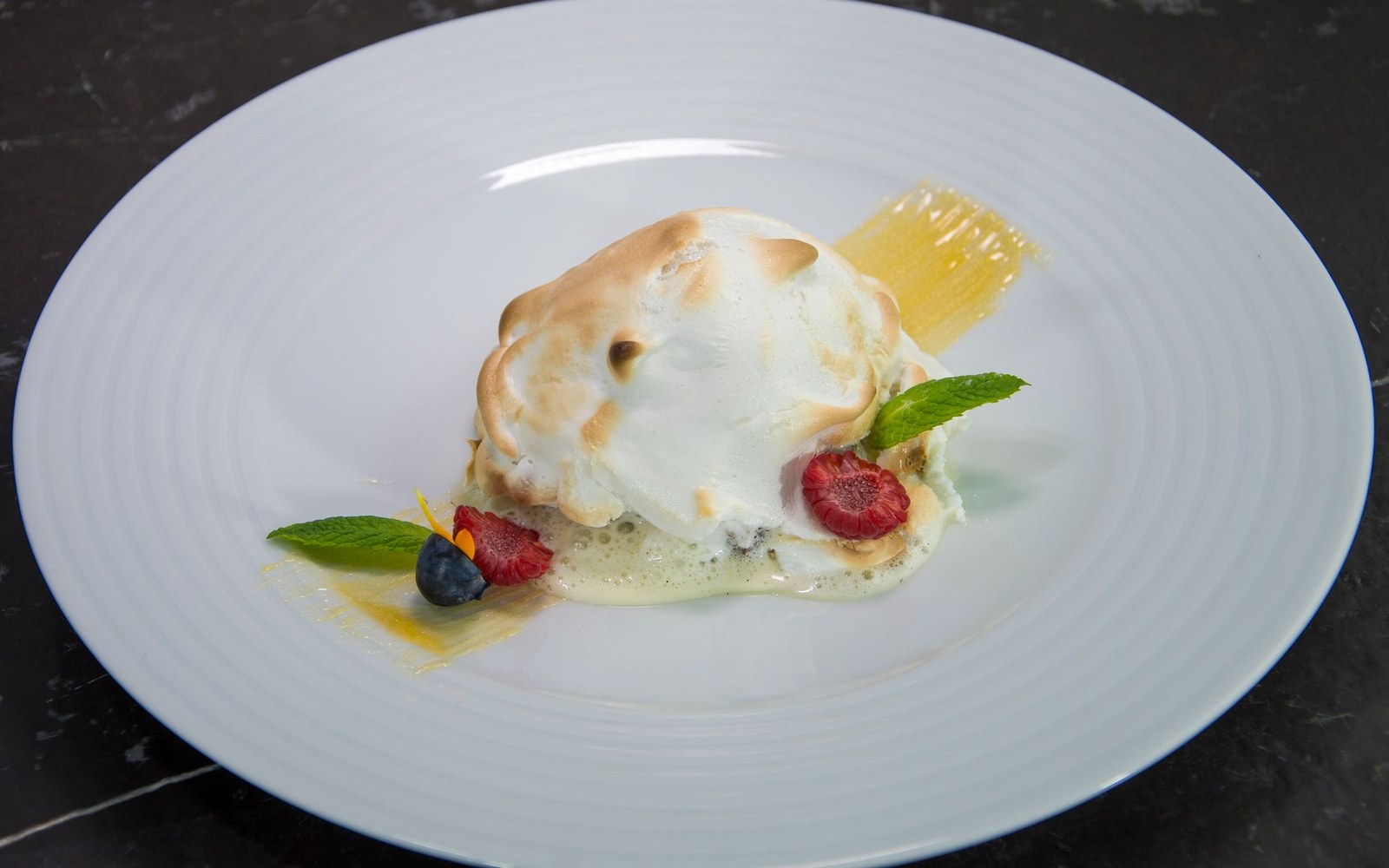
The Recipe
Queen of puddings is a Victorian layered pudding built on a principle that defeats many first attempts: the base must be set firmly enough to hold the jam layer without dissolving, yet tender enough to eat with a spoon. That balance depends almost entirely on the ratio of fresh white breadcrumbs to the custard that surrounds them. Too few crumbs and the base stays liquid; too many and it becomes dense and stodgy. The correct quantity is 75 g of fine white breadcrumbs to 570 ml of full-fat milk — a ratio that, combined with four egg yolks, produces a base that sets cleanly under a bain-marie at 150 °C in roughly thirty-five to forty minutes.
Base. Heat the milk with 25 g of caster sugar and the finely grated zest of one lemon until steaming. Remove from the heat and stir in the breadcrumbs. Leave for ten minutes to allow the crumbs to absorb the milk fully. Beat four egg yolks and stir them through the mixture. Butter a 1.2-litre oval or round dish and pour in the base. Set the dish in a bain-marie — a roasting tin filled with enough hot water to come halfway up the sides. Bake at 150 °C (fan 130 °C) until the base is just set with a slight tremble at the centre. Remove and allow to cool for ten minutes before proceeding.
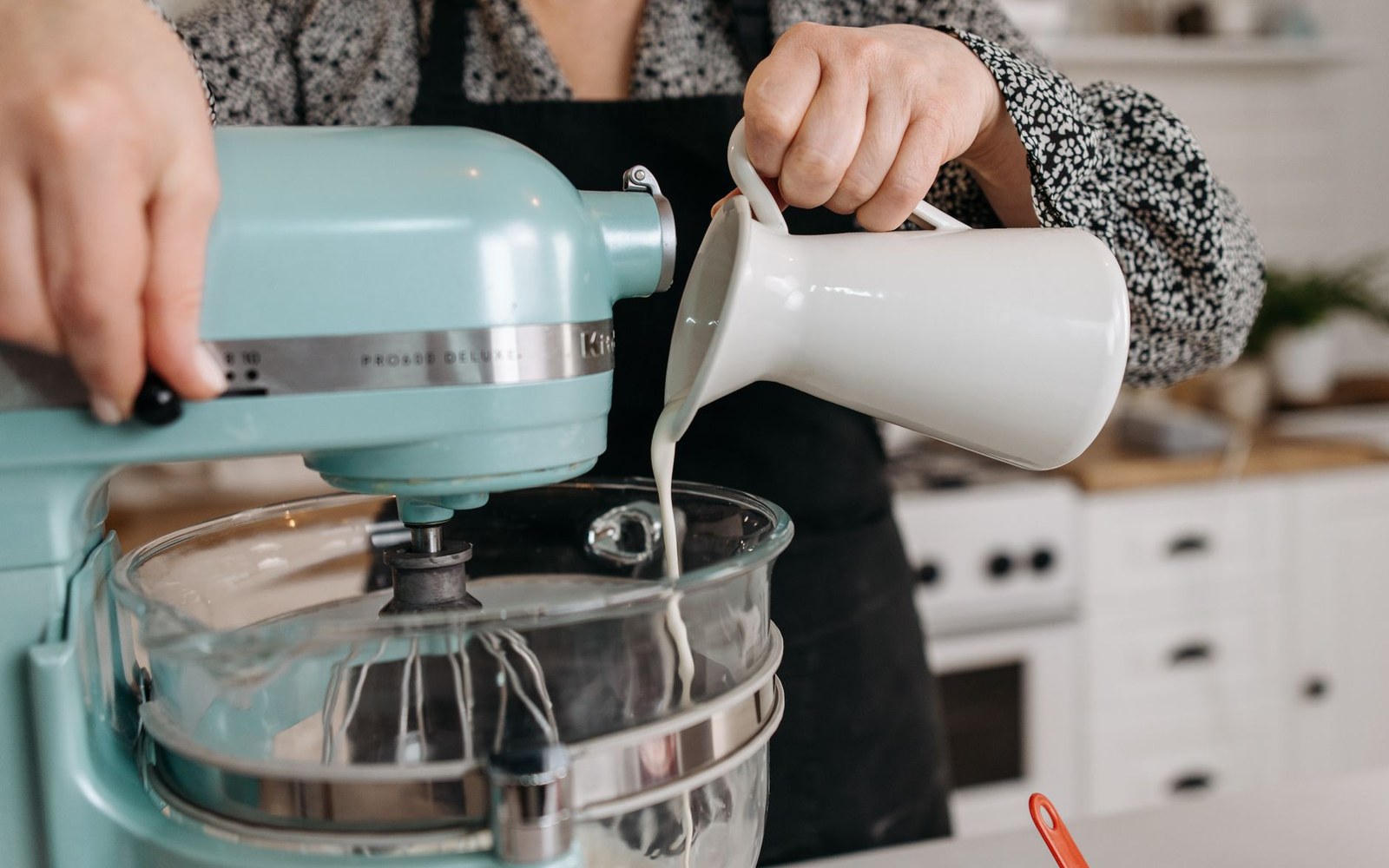
Jam layer. Warm 4 tablespoons of raspberry jam in a small saucepan until it loosens and becomes fluid. Spoon it gently over the surface of the set base, spreading it to the edges without pressing into the custard.
Meringue. Whisk four egg whites to soft peaks, then add 100 g of caster sugar in three additions, whisking to a stiff, glossy meringue after each. Pile the meringue over the jam, taking it to the edges of the dish to seal the layers and prevent the jam from bubbling out. Rough peaks are an advantage here. Return the dish to the oven — no water bath this time — at 180 °C (fan 160 °C) for twelve to fifteen minutes, until the meringue is set and its peaks are a deep amber.
The pudding is served warm rather than hot. The jam layer, once it has cooled slightly against the set base below and the meringue above, firms into a defined seam. Raspberry is the conventional choice; damson or blackcurrant can replace it without altering the method, though any jam with a high fruit-acid content will cut through the sweetness of the meringue more cleanly than a strawberry.