The Cloth Came First: How the Basin Replaced It
The pudding cloth shaped British cooking for more than a century before the ceramic basin made it obsolete — almost.
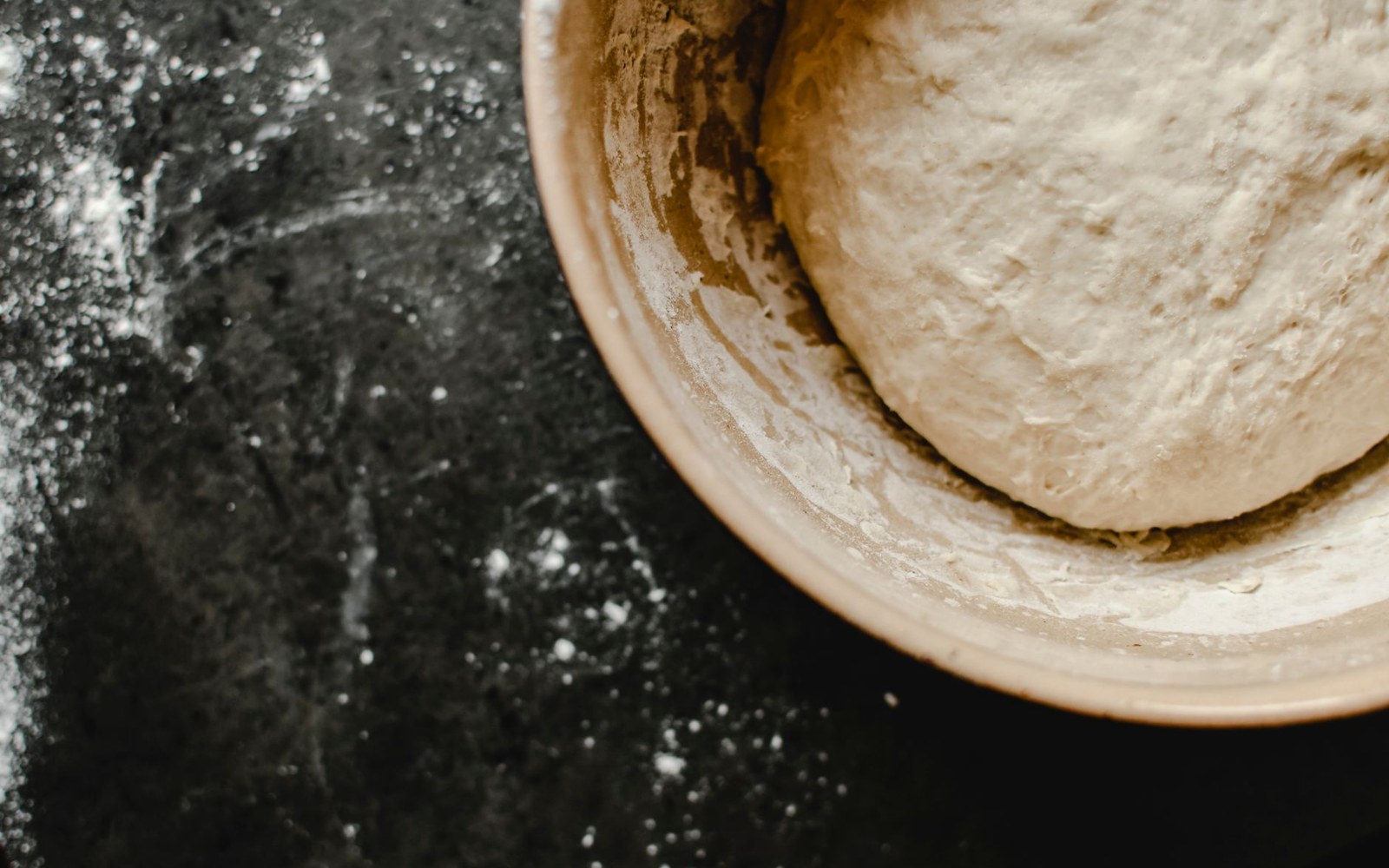
From Cloth to Ceramic
The cloth-boiled pudding emerged in the seventeenth century as a genuine technical advance: a floured linen cloth allowed cooks to suspend a mixture in boiling water, giving it a coherent shape and a firmer texture than any pottage or frumenty had possessed. The cloth was scalded, rubbed with flour to form a paste barrier against the water, packed with the raw mixture, tied tightly, and lowered into a pot. The result was a cannonball — dense, self-contained, and unmistakably a pudding rather than a porridge.
The pudding cloth did its work through direct immersion. Heat reached the mixture from all sides simultaneously, and the cooking liquid was always at a full boil. This produced a particular exterior: slightly leathery, almost skinned, where the floured cloth had pressed hard against the mix. Spotted dick and jam roly-poly still carry this tradition — a cloth-boiled suet pudding has a characteristic bite at its surface that a basin-steamed one does not.
The ceramic pudding basin arrived in widespread domestic use during the eighteenth century, as Staffordshire potters developed affordable, standardised earthenware. The basin's wide lip was designed from the outset to hold a cover in place — first a flour-and-water paste lid, later greaseproof paper and string. This sealed vessel changed the physics. Steaming rather than boiling meant the temperature inside the pot sat just at or below 100 °C, gentler than a rolling boil. The pudding cooked more slowly, the crumb opened a little more, and the interior stayed moister.
The basin also introduced the pleat — a fold across the centre of the covering paper that gives room for the mixture to rise during steaming without splitting its seal. It is a small detail, but it marks the difference between a clothed and a basin-cooked pudding at a glance.
By the time Isabella Beeton published her Book of Household Management in 1861, the basin was standard and the cloth already archaic in middle-class kitchens, though rural and institutional cooking held onto it longer. The basin imposed a flat bottom and a domed top — the shape modern cooks turn out onto a plate and expect. The cloth had made a sphere. Both worked. The basin simply fitted the changing kitchen better.