From Frumenty to the Cloth-Boiled Pudding: the Medieval Transition
A spiced grain pottage and a boiled cloth parcel look nothing alike. The line between them is nonetheless direct.

The Pottage That Started It
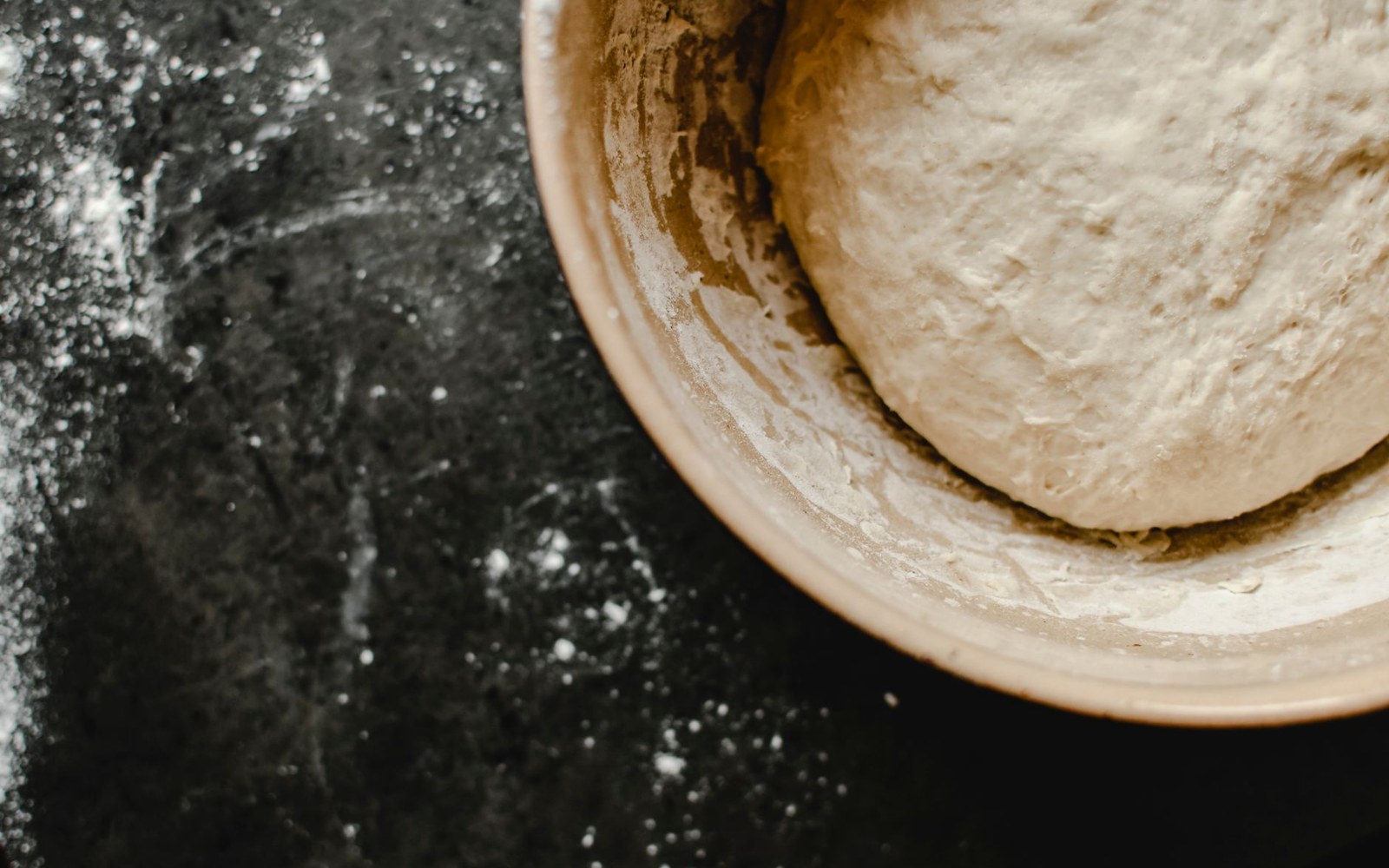
Frumenty — from the Latin frumentum, grain — was the default celebratory dish of the medieval English table. Hulled wheat was cracked, simmered in water until the grains burst and released their starch, then finished with almond milk, egg yolks, saffron and warming spices: cinnamon, mace, sometimes ginger. On feast days it was enriched with venison broth and served alongside roast meat, not as a separate course but as part of the same plate. It was neither sweet nor savoury in any modern sense; it occupied the medieval flavour register in which spice, fat and cereal grain were simply the language of abundance.
The earliest English recipes survive in manuscripts from the late fourteenth century, including the Forme of Cury, a collection compiled around 1390 for the household of Richard II. Frumenty appears there as a kitchen staple, its method stable across decades of manuscript copying. What is already present — and what matters for what comes later — is the logic of the thing: starch as a thickener and carrier, fat as an enricher, spice as a marker of occasion.
How the Pottage Changed
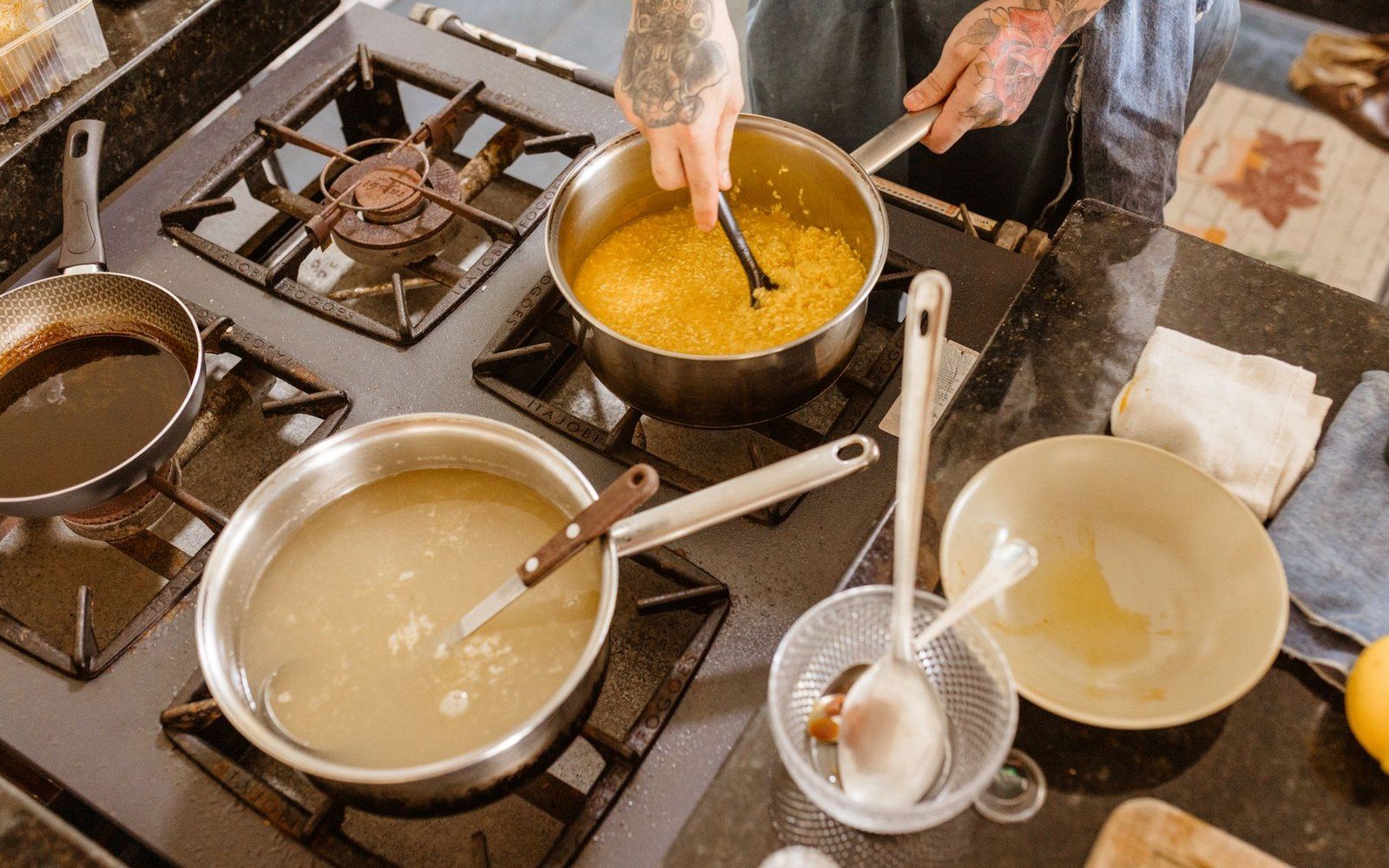
Between the fourteenth and sixteenth centuries, frumenty absorbed dried fruit. Raisins of Coraunce (currants, named for Corinth), great raisins and dates appear in variant recipes with increasing frequency as the spice trade became more reliable and dried fruit more affordable to prosperous households. The wheat grain gradually yielded to breadcrumb and, in some recipes, to oatmeal. The venison broth thinned and then disappeared, replaced by suet — the hard, crumbly fat rendered from around the kidney — which melted slowly and kept the mixture moist without adding liquid. The dish became sweeter, denser and richer with each generation of copying.
The Harleian Manuscript collection at the British Library contains a number of fifteenth-century English recipe books that trace this slow mutation. A dish called plum pottage — plum being the period's generic term for any dried fruit, not the fresh stone fruit — appears as a thickened, spiced, fruit-laden mixture that retained the pottage name but had moved a long way from the broth-and-grain original. It was still stirred in a pot and ladled, not sliced. The set form was yet to come.
The Cloth Makes It
The decisive technical shift arrived with the pudding cloth, probably in the early seventeenth century. Before it, boiled mixtures could only travel as far as their liquid would carry them — they were ladle food, not portable, not sliceable. Once cooks learned to pack a suet-and-fruit mixture into a floured cloth, knot it firmly and lower it into boiling water, the physics changed entirely. Steam pressure and the cloth's tension forced the mixture to set into a cohesive mass. When turned out, it held its shape. It could be sliced. It had become, in the modern sense, a pudding.
The technique is documented in English household manuscripts from the 1610s onward, and by the middle of the seventeenth century cloth-boiled puddings appear regularly in print. Gervase Markham's The English Huswife (1615) describes boiled puddings among a broad range of domestic preparations, placing the method firmly in the mainstream of prosperous English cooking rather than in aristocratic or guild kitchens. The audience was the managing housewife of a comfortable rural household — which tells us the technique had already dispersed beyond novelty.
What the cloth did was not merely mechanical. It also fixed the pudding as an event: something made in advance, tied, boiled for hours, and presented whole. The theatrical logic that would eventually produce the flaming Christmas pudding was already latent in the knot of a seventeenth-century cloth.
The basin replaced the cloth in the eighteenth and nineteenth centuries as Staffordshire ceramics became cheap enough for ordinary kitchens, but the method — long, wet heat; a tight seal; a mixture dense enough to hold — was inherited directly from the cloth tradition. Frumenty had become the plum pottage; the plum pottage had found the cloth; the cloth had made the pudding.