Matthew Walker, Cole's and the Supermarket Own-Label: What the Shelf Actually Costs
The branded pudding market is effectively a duopoly — two manufacturers, dozens of labels, one declining category.
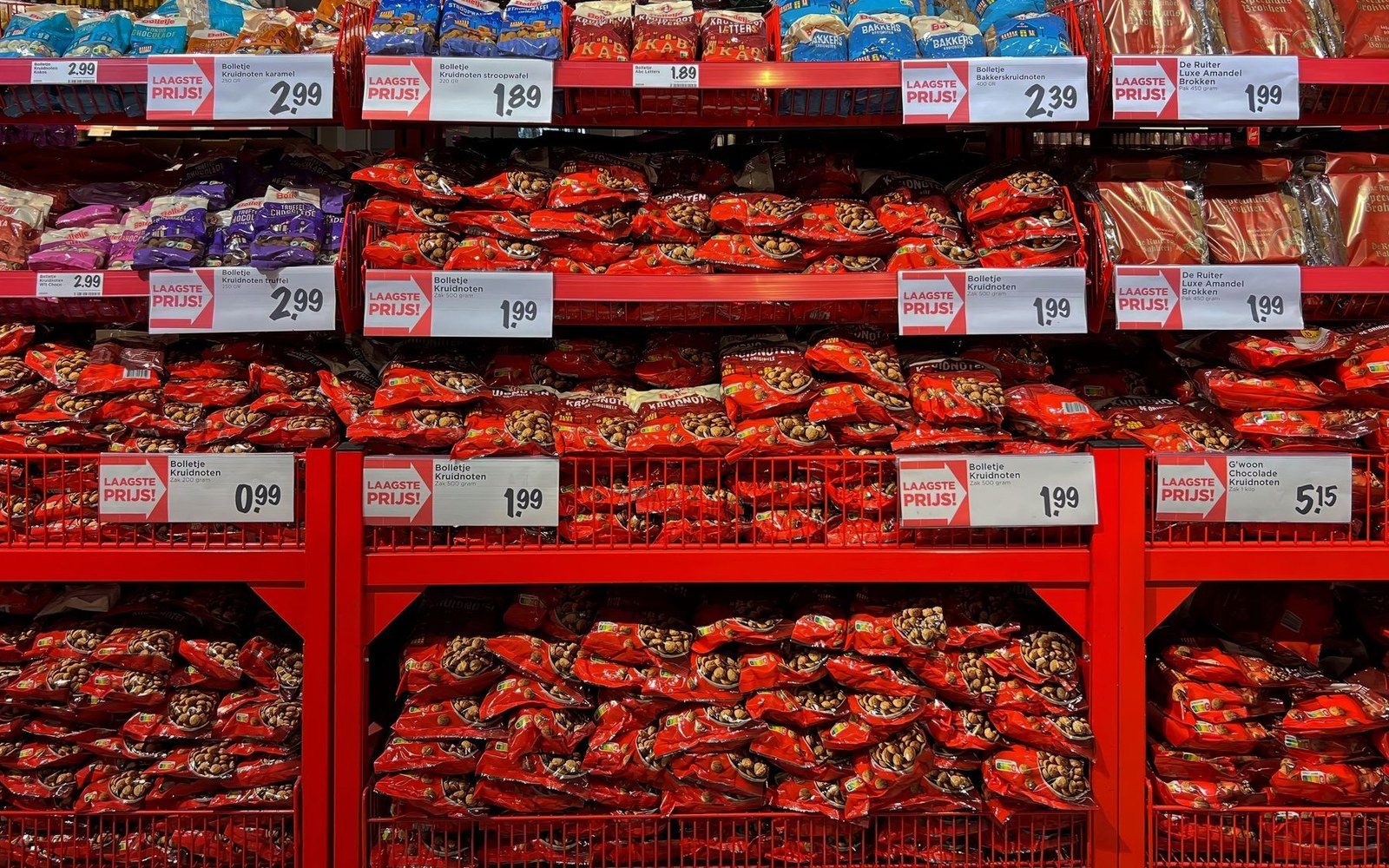
Two Factories, Many Labels
Matthew Walker, based in Heanor, Derbyshire, is the largest manufacturer of Christmas puddings in the world by volume. Cole's, a family business founded in Yorkshire, is the other significant player. Between them they supply not only their own branded ranges but a substantial portion of the supermarket own-label tier — the same pudding, or a close relative of it, sitting behind a dozen different house labels at prices ranging from under two pounds to well over ten.
The duopoly model is an open trade secret. A retailer commissioning its own-label Christmas pudding is almost certainly placing that order with one of these two producers. This means that comparing, say, a budget own-label against a mid-range branded pudding is not always a comparison of different products — it can be a comparison of different margins applied to very similar mixes, from the same production line.
Matthew Walker's branded puddings are sold in major multiples including Waitrose. Cole's, historically strong in the premium sector, positions its named range above the mid-market. Both companies also produce puddings for export, particularly to Australia and North America, where dried vine fruit and brandy remain the expected flavour signature regardless of how far the recipe has drifted from the Victorian original.
What the Shelf Charges
At the time of writing, a 400g supermarket own-label Christmas pudding from a major British multiple retails at roughly £2–£3.50 in the budget and mid tiers. A 400g Matthew Walker or Cole's branded equivalent sits at £4–£6. Premium own-label — the retailer's finest range — typically occupies £7–£12 for a 900g pudding, and occasionally higher for a headline product positioned as a seasonal statement.
The gap between budget own-label and branded is largely a packaging and marketing cost, not a recipe one. The premium own-label gap is more defensible: retailers do use higher-quality dried fruit, more spirit by weight, and sometimes a longer steam at the manufacturing stage. Whether the result justifies the premium against a pudding made at home is a separate question. According to Kantar data reported in The Grocer in 2024, Christmas pudding remains one of the few seasonal categories where the own-label share continues to grow at the expense of branded, even as the category overall contracts.
Year-on-year unit sales of Christmas pudding have been declining since the early 2010s. The Kantar grocery panel has recorded successive falls in volume, with category value partially sustained by premiumisation — fewer puddings sold, at higher prices. The proportion of British households that buy a Christmas pudding ready-made, rather than make one, is now estimated by the IGD at around a third, though the homemade share has also fallen, suggesting the pudding course itself is simply being skipped in a growing number of households.
What the Price Does Not Include
The retail price of a factory Christmas pudding reflects compressed margins, high-volume ingredient buying, and a product that must sit profitably on a shelf from October to Christmas Eve. It does not reflect the labour cost of eight hours of steaming, several hours of mixing and weighing, or the ongoing attention of feeding the pudding through November. The homemade pudding is almost certainly cheaper in pure ingredient cost than a premium branded one; it is not cheaper in time.
Isabella Beeton's 1861 recipe, reproduced in the Book of Household Management, lists ingredients whose total cost she calculated in shillings — and noted that the pudding was economical by the standards of the era. The equivalent calculation now, with dark muscovado at current grocery prices, dried fruit at post-2023 elevated levels, and suet at roughly double its pre-2020 price, still lands well below the premium shelf. What it costs to make a Christmas pudding honestly, ingredient by ingredient, is an argument for doing so. What the shelf charges for the convenience of not making it is, at the premium end, increasingly hard to justify.