Custard That Will Not Split
Poured custard is six egg yolks, 600 ml of milk or cream, and the ability to stop at 82 °C.
The ratio and the method
The starting point is a custard of six egg yolks to 600 ml of liquid — whole milk, or a mixture of milk and double cream in any proportion that suits the dish. Sugar goes in at 60 g; a vanilla pod, split and scraped, is added to the milk as it heats. These figures are not guesses: they produce a custard that coats a spoon firmly enough to be useful without setting solid in the jug. Scale up or down by keeping the ratio of one yolk to 100 ml liquid.
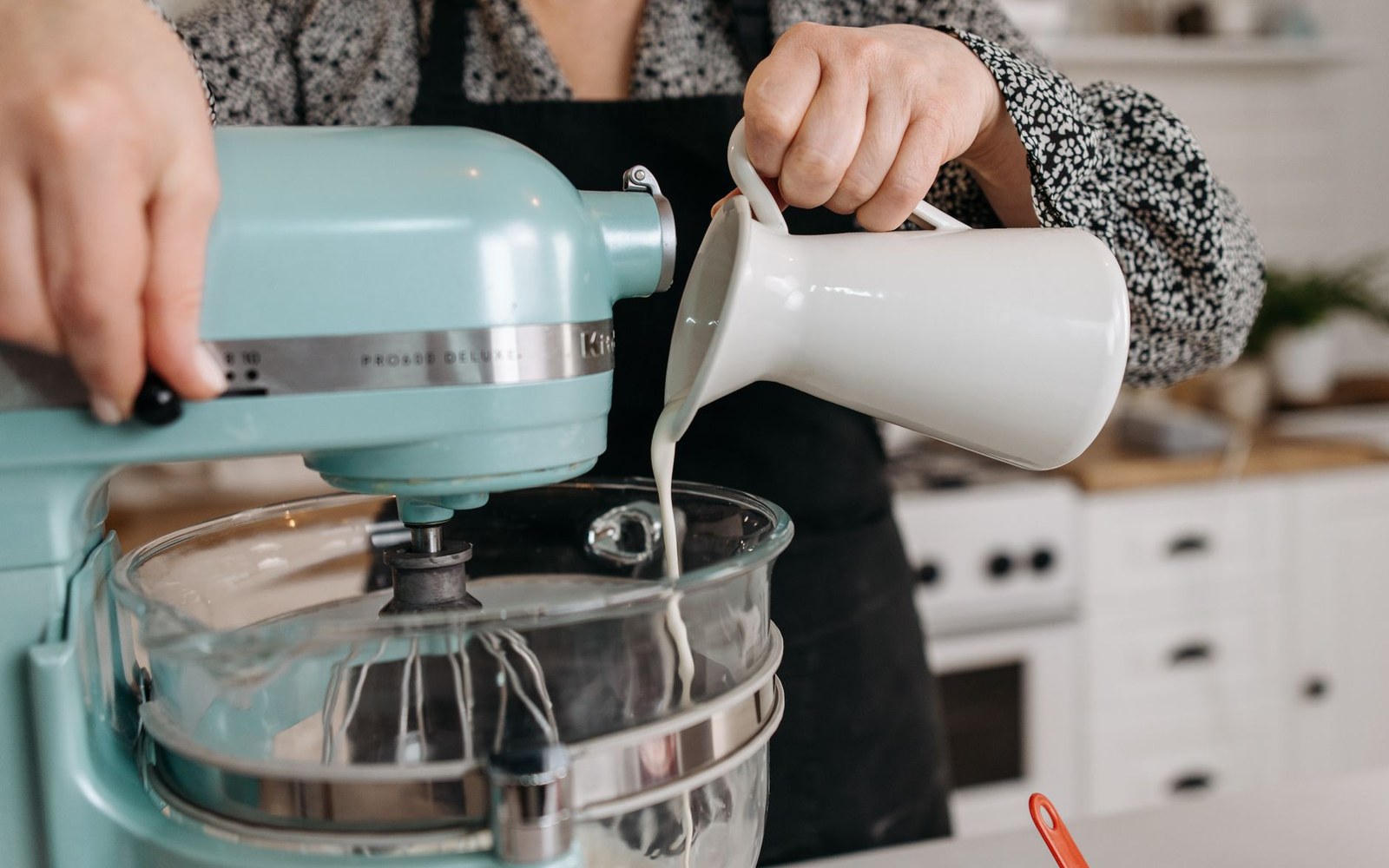
Yolks and sugar are whisked together in a bowl until the mixture is pale and slightly increased in volume. The milk goes into a saucepan over a medium flame and is brought to just below simmering — small bubbles at the edges, steam rising, but no rolling boil. At this point the hot milk is poured steadily onto the yolk mixture while whisking continuously. This is tempering: it raises the yolks' temperature gradually rather than scrambling them on contact with the pan. The combined mixture goes back into the rinsed saucepan.
From here, the cook's only job is to stir and watch the thermometer. A digital probe thermometer reads continuously and removes all guesswork. The custard thickens noticeably between 75 °C and 82 °C, as the egg proteins begin to coagulate and tighten around the liquid. At 82 °C the proteins are set enough to thicken the custard but not so tight that they expel their moisture and curdle. Pull the pan off the heat at 82 °C. The residual heat in the pan will carry the custard a degree or two further; that is expected and harmless.
Stir constantly throughout this phase — a heatproof spatula, working the bottom and corners of the pan. If the custard is left to sit against the hot base it will overheat locally long before the thermometer catches up, and local overheating is how custards split. Constant movement averages the temperature across the whole mass and gives the thermometer an accurate reading.
Cornflour as insurance
One level teaspoon of cornflour, worked into the yolk-and-sugar mixture at the start, raises the temperature at which the custard splits to approximately 90 °C. This works because cornflour's starch granules swell and thicken the mixture before the egg proteins reach their coagulation point, giving the cook a wider window in which to work. The trade-off is a very slight starchy character that disappears if the custard is stirred over heat for a full two minutes after it thickens — long enough to cook out the raw starch. This is the method used in professional pastry kitchens and in most crème pâtissière variants; for a poured custard it is optional insurance, not a requirement.
Whether cornflour is used or not, the finished custard is poured immediately through a fine sieve into a warm jug. The sieve catches any threads of cooked egg white that have caught on the pan's edge; without it even a well-made custard can have a gritty note. Pressing a disc of cling film or dampened greaseproof paper directly onto the surface stops a skin forming while the custard rests.
A custard made this way will hold, covered, in a warm bain-marie for up to thirty minutes before serving. If it must be made ahead, cool it rapidly over a bowl of iced water, refrigerate, and reheat gently in a bain-marie to no more than 70 °C — enough to warm it through without risk of curdling. Reheated slowly with constant stirring it is indistinguishable from freshly made.
The thermometer is not optional. Every other instruction in this method assumes that the cook knows, to within a degree, where the custard is.