Baked Rice Pudding and the Skin on Top
The oven does the work. The cook's only job is not to interfere.
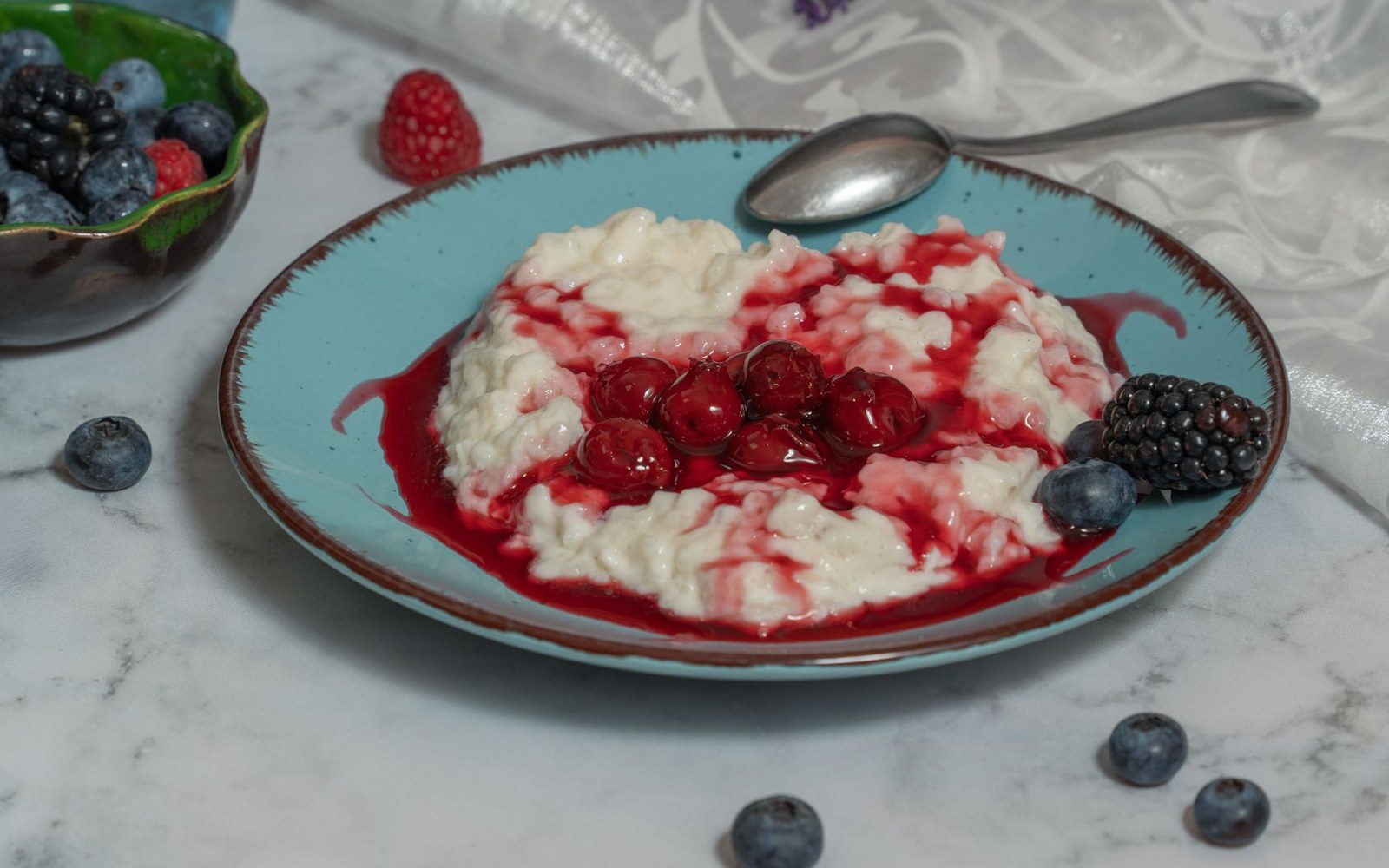
Getting the Ratio Right
Pudding rice — a short-grain variety that releases starch slowly under long, gentle heat — is the only rice suited to this. Long-grain rice stays separate; it will not give you the thick, spoonable result that is the whole point. The ratio that works is 75g of pudding rice to 900ml of full-fat milk and 150ml of double cream. That quantity fills a 1.2-litre buttered baking dish and serves four generously. The cream is not luxury: it raises the fat content enough to carry the nutmeg and protect the milk from scorching at the edges during a long bake.
Combine rice, milk and cream in the buttered dish. Add 30g of caster sugar, a generous grating of whole nutmeg — at least half a nut — and a knob of butter, roughly 15g, broken across the surface. Stir once, then stop. The dish goes into an oven set to 150°C fan (170°C conventional, Gas Mark 3).
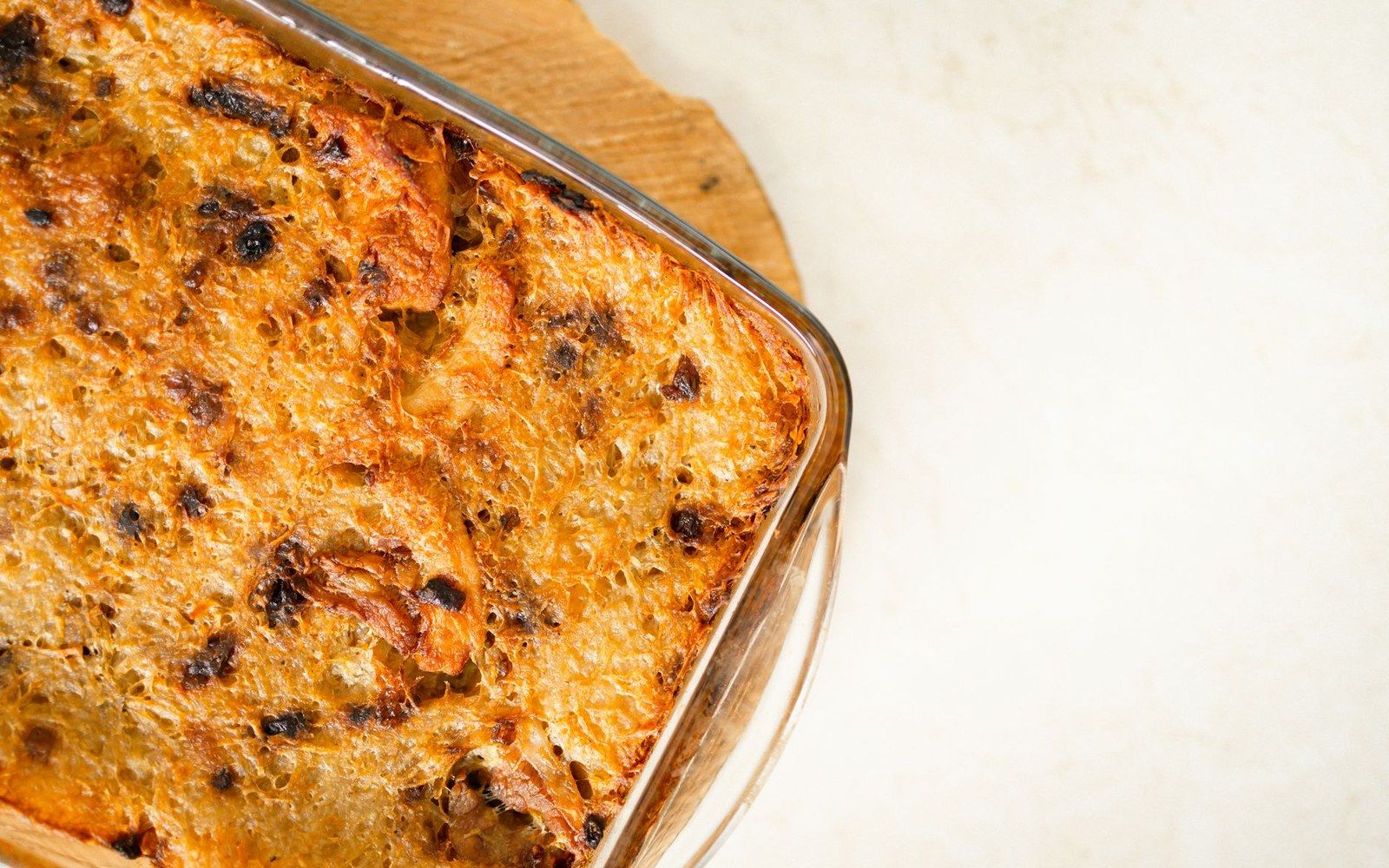
The Skin and What It Takes
After 30 minutes, a pale film forms. After 90 minutes, that film has set to the deep bronze skin that is, for many people, the entire reason for making this pudding. The total bake is two hours and fifteen minutes. Do not stir after the first 30 minutes. Stirring breaks the skin before it can form and turns the pudding uniform and pale, which is a lesser thing.
The oven temperature matters precisely because the skin and the interior cook at different rates. Too hot — above 160°C fan — and the edges bubble and the centre is grainy before the surface has properly coloured. Too cool, and you wait three hours for a skin that never quite sets. At 150°C fan, the interior reaches the right thick, slow-moving consistency at almost exactly the moment the skin achieves its Maillard browning: the network of reactions between amino acids and reducing sugars that produces flavour and colour in browned food.
Serve straight from the dish. The pudding firms as it cools, so if it is to sit, pull it from the oven with a slight tremor still at the centre — it will set fully in the dish. Jam — raspberry especially — spooned into the base of a bowl, with a spoon of pudding over it, is the traditional accompaniment and needs no improvement.